
Compare and Contrast Representations of Depression

Updated: Jul 8, 2020
Some artists use these themes to depict their own private struggles with mental illness, whereas others use them bring mental health issues to the forefront of public awareness and reduce public stigma.
Stereotypes, stigmatization in Mass Media
Mental Health Support Groups:
In movies and tv shows, members of mental health support groups or recovery groups are often portrayed as troubled and peculiar. According to Kenneth Anderson in Psychology Today, Although this may be the truth for some groups, the majority of Alcoholics Anonymous meetings involve people from all backgrounds and walks of life. However, many people who may look “normal” on the outside are in fact battling severe mental illness, some are able maintain their appearance not completely “consumed” by angst and pain. Some who may have recovered tend to continue finding support in such groups.
Appearance of people with Depression:
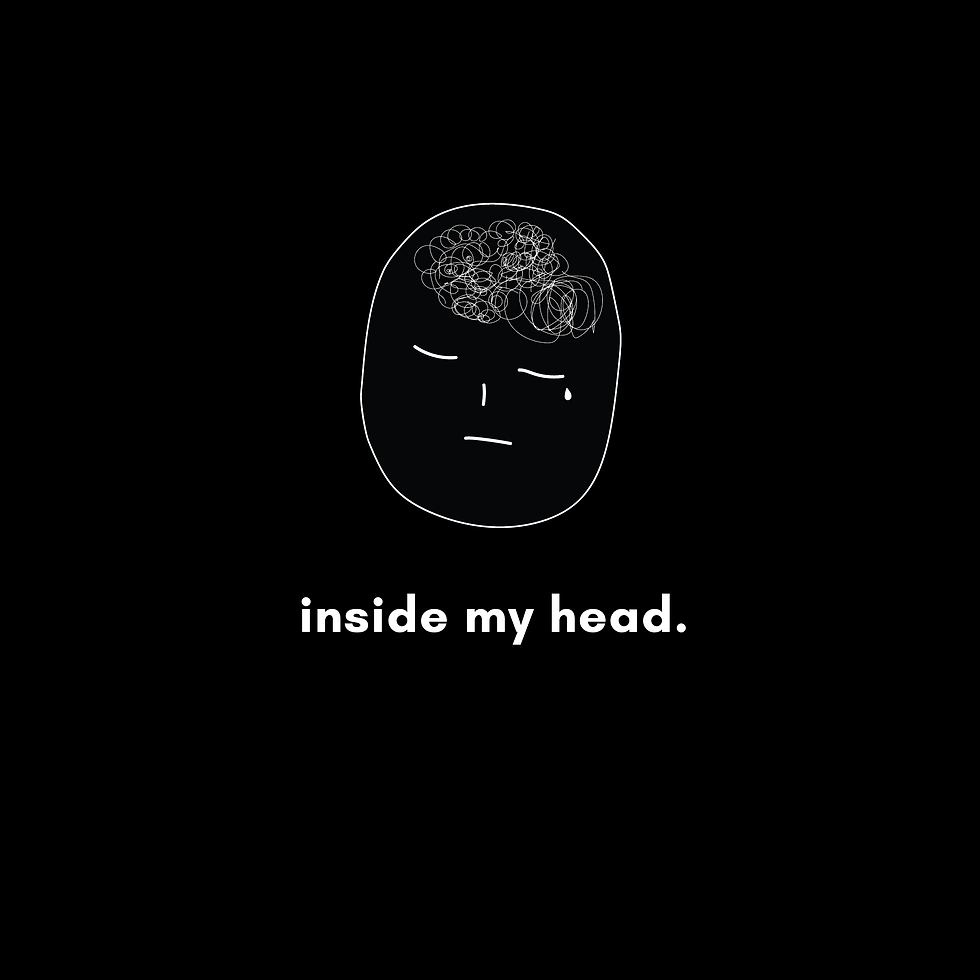
Often in media representations, characters who are experiencing depression are often portrayed with a few characteristics. Characters who are depressed are often in a horrible state, locked themselves at home, lying in the middle of heaps of junk foods and takeaways. While, it is not entirely untrue as some with severe depression might end up in such a state, those with mild depression could usually function normally. As stated above, as mental health affect people internally therefore, some who appear put-together may be struggling inside.
Accurate Representations
Language used in Depression
Studies:
Content
those with symptoms of depression use an excessive amount of words conveying negative emotions, specifically negative adjectives and adverbs – such as “lonely”, “sad” or “miserable”.
Style
“Absolutist words” – which convey absolute magnitudes or probabilities, such as “always”, “nothing” or “completely” – were found to be better markers for mental health forums than either pronouns or negative emotion words.
“Cannot” and “Can’t” are reoccurring words
Collected Narratives
A: “I see no purpose in what I do and have no desire to do anything else. “
B: “I could feel as if I'm the only person in the world, lonely & unwanted, even though the truth isn't so.”
C: “No matter what you do, how good you are it just tells you you're not good enough,
incompetent and never enough to deserve what you have.”
Online narratives from depression forums:
X: But depression is so insidious — and it compounds daily — making it impossible to ever see
the end. That fog is like a cage without a key.
Verity Smart : believing yourself entirely alone, no hope of rescue and knowing that your going to run out of energy soon,
Anon : And then you realise you are stuck because there is no light to help you find your way.
Lyrics example:

Lyrics:
Unlike movies and tv shows, songs and lyrics are considered a poetic form of self expression, usually has personal emotions and experience. Although there are also known artists who sings about depression, many singer/ songwriters/ lyricists are smaller singers / individuals who express themselves through music and words.
Words the most basic form of expression, not everyone can express visually, but most can through words. Movies, tv shows, music video or some forms of visual art, unless the creator is the source itself, often times they are reinterpreted similar to what I am doing.


Metaphorical Representation of Depression
Conceptual Metaphor Theory (CMT) claims that human beings can only understand abstract, complex phenomena by metaphorizing them in terms of concrete, more basic phenomena-and do so systematically. Investigating conceptual metaphors in non-verbal media is essential
for the tenability of CMT’s claim that we fundamentally think in and live by metaphors rather than just use them verbally.
*Crucial for this project, as I will be mostly converting words into visual representations.
Depression is often depicted with metaphors, in literature, visually or aurally.
A study on world-less animated on depression was conducted, concluding that wordless metaphorical expression can express depression as well as verbal discourse can.
Two dominant metaphors:
Depression is a dark monster and depression is a dark confining space.
Lakoff’s ‘duals’ theory discussed in ‘The contemporary theory of metaphor’ (1993).
(1) Depression is a natural agent (subcategories: depression is a storm and depression is a cloud / Gray Rain of Depression)
(2) Depression is a container (subcategories: depression is a trap and prison)
(3) Depression is darkness (subcategories:depression is a shadow and depression is a vacuum)
(4) Up–down schemas (subcategories: depression is feeling down and depression is a
downward road or path)
(5) Depression is a monster/big animal.
Collected Narrative (C): It's like a big monster, always there. Looking at your every move.

Visuals Depiction of Depression
Emptiness : In music videos, artworks, the main character is often in endless emptiness
Colours: Cold, Dark, blue, purple,
References
Al-Mosaiwi, M. (2018) “People with depression use language differently – here’s how to spot it”, The Conversation, February 2. Available at: https://theconversation.com/people-with-depression-use-language-differently-heres-how-to-spot-it-90877 ( Accessed: 8 March 2019 ).
Fawcett, K. (2015) “How Mental Illness is Misrepresented in the Media”, U.S.News, April 15. Available at: https://health.usnews.com/health-news/health-wellness/articles/2015/04/16/
how-mental-illness-is-misrepresented-in-the-media ( Accessed: 8 March 2019 ).
Forceville, C. and Paling, S. (2018) “The metaphorical representation of DEPRESSION in short, wordless animation films”, Journal of Visual Communication, University of Amsterdam
September. Available at: https://www.researchgate.net/publication/327799344_The_
metaphorical_representation_of_DEPRESSION_in_short_wordless_animation_films_e-print_ahead_of_press_Open_Access_in_Jnl_of_Visual_Communication_September_2018 ( Accessed: 14 March 2019 ).
Haider, A. (2018) “How Cinema stigmatizes mental illnesses”, BBC Culture, August 28. Available at: http://www.bbc.com/culture/story/20180828-how-cinema-stigmatises-mental-illness ( Accessed: 8 March 2019 ).
Stresing, T. (2010) “Depression in the Media”, Everyday Health, May 3. Available at: https://www.everydayhealth.com/depression/depression-in-the-media.aspx ( Accessed: 8 March 2019 ).
Tartakovsky, M. (2018) “The Media and Mental Illness: The Good, the Bad and the Ridiculous”, PsychCentral, October 8. Available at: https://psychcentral.com/lib/the-media-and-mental-illness-the-good-the-bad-and-the-ridiculous/ ( Accessed: 8 March 2019 ).
Comments