
Research Journal I

Updated: Jul 8, 2020
The research project focuses on the topic of depression as while the conversation for mental health has become more relevant and gaining more attention, stigmas continue to surround mental health, perpetuated by the media, the most common source of information that people are increasingly reliant on. It was stated in the research specification that this project is aimed at better understanding the personal experience of individuals battling depression, how do they express themselves as opposed to popular media representations of depression as well as the relationship between depression and creativity as psychiatric disorders are often associated with artworks. The sources initially reviewed, such as ‘Visual Arts and Mental Health (Tomlinson, 2018)' were academic journals revolving around the relationship between creativity and mental disorders, suggesting that visual arts and other forms of artistic expression could potentially ameliorate the personal wellbeing of of an individual. Psychotherapist Terry Rustin on the other hand conducted a study on the intersection of the art and mind (2008). Rustin started painting to gain a better understanding of the conditions of her clients by putting herself herself in their shoes, each piece are unique to a client, some contributed to the work while and some did not, each had a different reaction to the painting of their emotional experiences. These sources provided a more in-depth insight on personal expression and third-person interpretation of mental illness. Currently, the project is focused on the representation of depression, studying the expression of first person experience and third person reinterpretation in the media.
In order to have a more personal perspective and expression of depression, a webpage was created detailing the purpose of the project and asking others to share their personal narratives, descriptions of their depressive episodes. The first submission received were quite general, therefore the text was rephrased to prompt readers to be more descriptive which will aid the interpretation of depression in the form of art at the final stage. Unfortunately, after about two weeks since the web page was put out, no more than three submission was received. Although the it is still open for more submission, I decided to turn to online depression forums which are platforms where people share their personal narratives.
At the same time, studies on the visual and linguistic depiction of depression in the media including film, animations, songs and lyrics were carried out. Comparisons between media representations and individual narratives were made and it is observed that there are specific characteristics in the expression of depression both visually and linguistically. The compiled textual narratives from both the webpage and depression forums shows many similarities with lyrics of songs on depression, both of which supported the studies on the linguistic specific content and style of people with depression of excessive negative and absolutist words. Similarly, visual portrayals of depression has reoccurring traits. In ‘The metaphorical representation of depression in short, wordless animation films (2018)’ by Forceville and Paling, it is stated that humans can only understand abstract complex phenomena by metaphorizing them in terms of concrete, more basic phenomena. After analyzing the individual narratives and visual imagery connected to depression, it is found that they once again share similar expressions. While there are vast similarities found between the individual text and the visual and textual representations, there are countless articles and academic papers that discussed the how the media perpetuates the stigmatization of mental illnesses. Songs of this genre are often the story of the singer or lyricist themselves, and the short films and animations are often the works of individuals or small teams whereas mainstream films and television are huge productions that often involves layers of re-interpretation and any misinterpretation or negative imagery would heavily influences society’s perspective on mental health. Therefore, the songs and short films and animations are arguably more “personal” as compared to mainstream film and television which have become a dominating source of information.
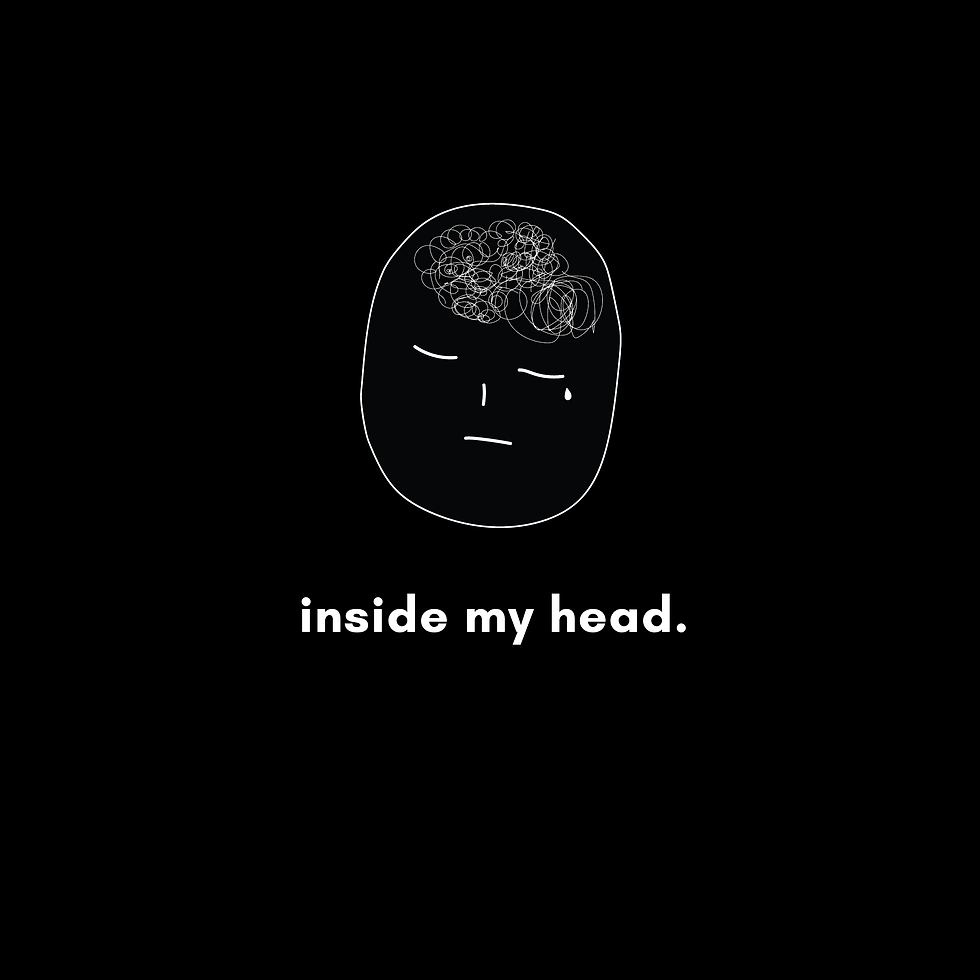
Statistics have shown that there is a high correlation between creative “geniuses” and depression and through this analysis, it is observed from the sources that many creative works are riddled with hints of their imminent desperation or innermost thoughts. The language of depression are often negative, dark and metaphorical phrases are used to describe their emotions. Both visually and linguistically, depression are described using metaphors, most common ones are depression is a shadow or monster and depression is a natural agent like the sea, storm, dark cloud mist and fog, all of which are considered “bad” situations by the majority. Through this research it is found that many representations of depression regardless of medium draw on similar underlying metaphors.
For the next stage of research, I would like to look into unconventional representations of depression as well as other variables that are associated with or would simulate the experience of depression. Through these knowledge gain on the representation of depression, aware of the implications of them, create my own rendition of the emotional experiences of people with depression through the compiled narratives, similar to the study by psychiatrist Terry Rustin. The final work aims to evoke emotions that people with depression can relate to despite their different experiences and those without to gain a better insight on depression.
References
Forceville, C. and Paling, S. (2018) ‘The metaphorical representation of DEPRESSION in short, wordless animation films’, Journal of Visual Communication, University of Amsterdam September. Available at: https://www.researchgate.net/publication/327799344_The_metaphorical_representation_of_DEPRESSION_in_short_wordless_animation_films_e-print_ahead_of_press_Open_Access_in_Jnl_of_Visual_Communication_September_2018 [Accessed: 14 March 2019]
Rustin, T. A. (2008) ‘Using artwork to understand the experience of mental illness: Mainstream artists and Outsider artists.’ Psycho-social medicine, 5, Doc07., July 8. Available at: https://www.ncbi.nlm.nih.gov/pmc/articles/PMC2736519/ (Accessed: 11 January 2019)
Tomlinson, A. (2018) ‘Visual art and mental health’, what works wellbeing, January. Available at: http://allcatsrgrey.org.uk/wp/download/public_health/mental_health/Full-report-art-mental-health-wellbeing-Jan2018.pdf (Accessed: 11 January 2019).
Comments